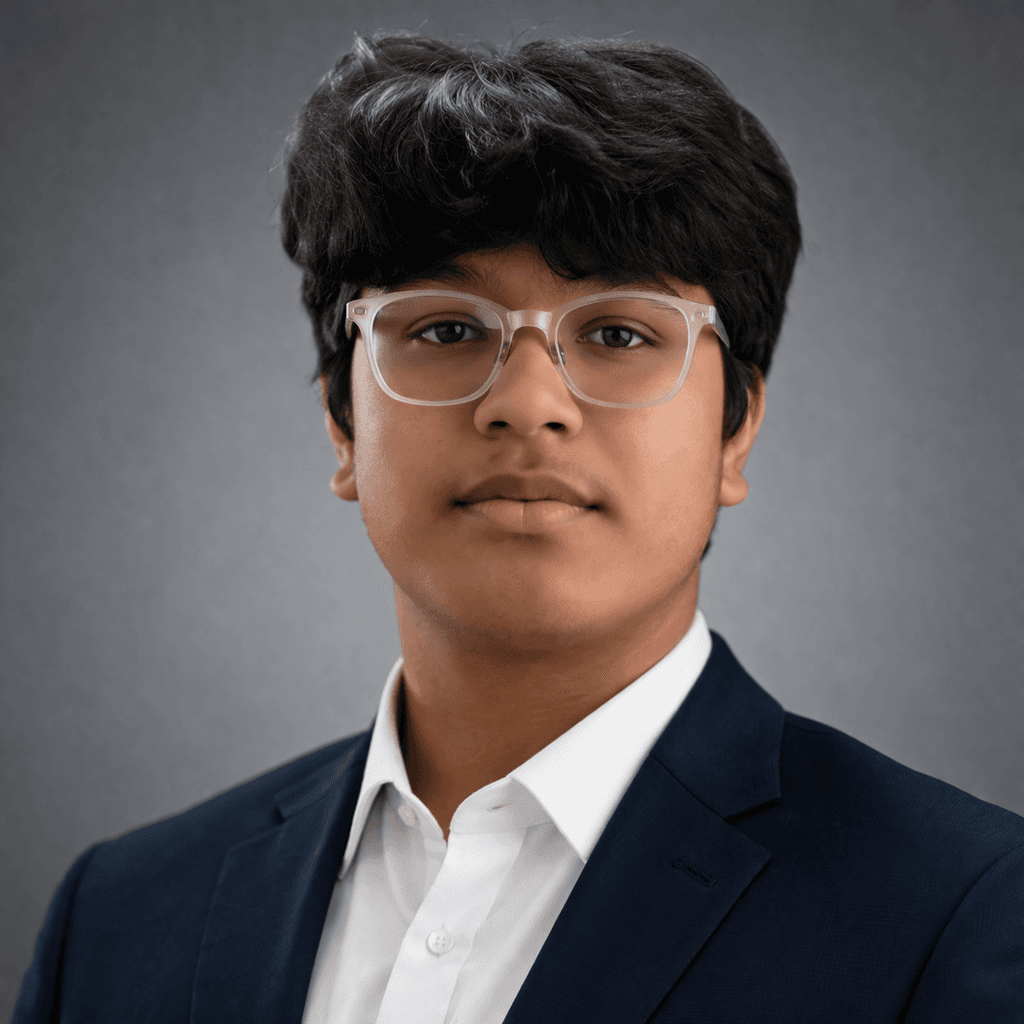
Shaswat Senthilkumar
1st Place Science Fair
Computational Biology

Shaswat Senthilkumar

10th Grade
Princeton, NJ

From curious 10th grader to 1st place winner at the Mercer Science & Engineering Fair at Princeton University with groundbreaking ML research on stem cell differentiation

1st Place — Mercer Science & Engineering Fair
Held at Princeton University

Where Shaswat Started

His Background

  • • 10th grade student at West-Windsor Plainsboro HS South
  • • Passionate about computational biology and machine learning
  • • No prior research or publication experience
  • • Interested in applying AI to solve biomedical problems

His Goals

  • • Conduct original research in computational biology
  • • Win at regional science fairs
  • • Learn advanced machine learning techniques
  • • Build a strong research profile for college applications

His Vision

"I wanted to use machine learning to predict how stem cells differentiate. If we could understand this process better, we could advance regenerative medicine and help treat diseases."

— Shaswat, before joining YRI

The Research

Working with his YRI mentor, Shaswat developed a machine learning framework to predict stem cell differentiation outcomes using RNA sequencing data—a complex challenge at the intersection of computational biology and AI.

Stem Cell Differentiator: ML-Based Prediction of Stem Cell Differentiation Using RNA-seq Data

Problem:

Predicting how stem cells will differentiate is crucial for regenerative medicine but extremely complex

Data Sources:

RNA sequencing datasets capturing gene expression patterns during differentiation

Methods:

Machine learning models trained on RNA-seq data to predict differentiation outcomes

Innovation:

Novel approach combining gene expression analysis with predictive ML modeling

ML-Powered Stem Cell Analysis

Shaswat built a sophisticated pipeline that processes RNA-seq data to predict differentiation pathways. His model helps researchers understand which genes are most important in determining cell fate decisions.

RNA-seq → Feature Extraction → ML Classification → Differentiation Prediction

The pipeline processes gene expression data to predict stem cell outcomes

Medical Impact

Understanding stem cell differentiation has implications for treating diseases like Parkinson's, diabetes, and heart disease. Shaswat's research contributes to the field of regenerative medicine by providing tools to better predict and control cell fate.

Competition Results

Science Fair Success

Mercer Science & Engineering Fair at Princeton University

1st
Place Winner
Princeton
University Venue
ML
Computational Biology

The Outcome

Science Fair Competition

1st Place Winner — Mercer Science & Engineering Fair

Category:

Computational Biology / Machine Learning

Venue:

Princeton University

Project Focus:

Stem Cell Differentiation Prediction

Impact:

Advancing regenerative medicine research

"

YRI helped me turn my interest in computational biology into a real research project. My mentor guided me through the entire process—from understanding RNA-seq data to building ML models. Winning 1st place at Mercer Science Fair was an incredible validation of our work.

Shaswat Senthilkumar
1st Place, Mercer Science Fair
Before

10th grader interested in AI and biology, no research experience

After

1st Place winner at Princeton University science fair with original ML research

Technical Highlights

RNA-seq

Gene expression analysis from sequencing data

ML

Machine learning models for differentiation prediction

Stem Cells

Understanding cell fate decisions for regenerative medicine

Ready to Start Your Research Journey?

Join the YRI Fellowship and work with expert mentors to conduct original research, win science fairs, and build a profile that stands out.

Apply Now