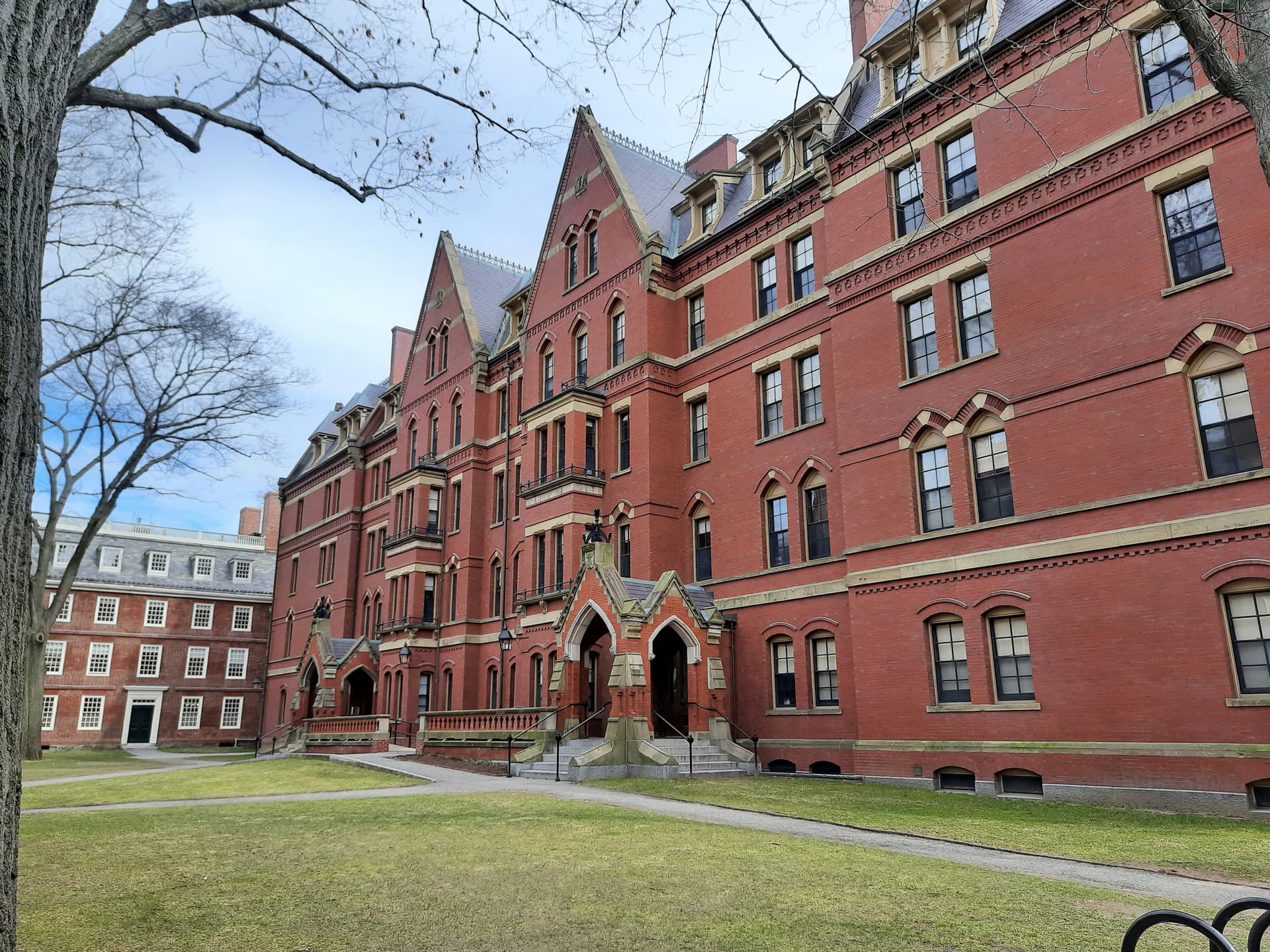
Here's a number that should concern every ambitious high school student and their parents:
47,000 students applied to Harvard last year with near-perfect GPAs and test scores. 43,000 of them were rejected.
Read that again.
A 4.0 GPA and 1550 SAT score used to guarantee admission to top universities. Today, they're just the entry ticket—the minimum requirement to even be considered.
So what separates the 4,000 who get in from the 43,000 who don't?
The Uncomfortable Truth About "Perfect" Applicants
Let's look at a typical "strong" applicant:
- 4.0 GPA (weighted: 4.5)
- 1540 SAT / 35 ACT
- National Honor Society President
- Varsity soccer, 3 years
- Hospital volunteer, 200 hours
- Model UN, 2 years
- Piano, Grade 8
This profile describes approximately 30,000 Harvard applicants every year.
It's not bad. It's just... unremarkable. Admissions officers have seen this exact profile hundreds of times before your application even hits their desk.
What Admissions Officers Actually Say
Former Harvard admissions officer William Fitzsimmons described what makes applications memorable:
"We're looking for students who have done something with their time that goes beyond the ordinary—something that demonstrates genuine intellectual curiosity and the potential to contribute to human knowledge."
Notice what he didn't say: perfect grades, high test scores, or long activity lists.
He said: "contribute to human knowledge."
The Profile That Actually Gets Accepted
Here's what a competitive applicant looks like today:
- Published research paper in a peer-reviewed journal
- Patent filed or provisional patent on original invention
- Founded organization with measurable impact (not just a club)
- Competition recognition (ISEF finalist, Regeneron scholar, Olympiad medalist)
- Real-world application of their work (deployed software, implemented solution)
These students don't just have good grades. They have credentials that prove they can contribute at the highest level.
The difference isn't effort—the "typical" applicant worked hard too. The difference is what they worked on.
Why Grades Are No Longer Differentiators
Grade Inflation Is Real
In 1990, the average GPA at American high schools was 2.68. In 2024, it's 3.38.
More students have 4.0 GPAs than ever before. When everyone has perfect grades, perfect grades mean nothing.
Test-Optional Changed Everything
Many top universities went test-optional during COVID and stayed that way. This means:
- SAT/ACT scores matter less
- Other differentiators matter more
- The "grade + score" formula is broken
Admissions Is Holistic (Which Means Subjective)
"Holistic admissions" sounds nice. In practice, it means admissions officers are looking for something that makes you memorable.
A 4.0 GPA is not memorable. A published research paper is.
The Real Criteria for Ivy League Admission
Based on what admissions officers have shared publicly, here's what actually matters:
1. Evidence of Intellectual Curiosity
Not "I took AP classes." That's following a path someone else created.
Real intellectual curiosity looks like:
- Pursuing questions that don't have textbook answers
- Creating original research or projects
- Going deep on a topic beyond what's required
2. Demonstrated Impact
Not "I volunteered for 200 hours." That's participation.
Real impact looks like:
- Research that contributes to knowledge
- A project that solved a real problem
- An organization you built that achieved measurable results
3. Potential to Contribute
Not "I got good grades in your subject." That's consumption.
Real contribution potential looks like:
- Published work that adds to human knowledge
- Patents that demonstrate innovative thinking
- Recognition from external experts (not just teachers)
The Profile Harvard Can't Reject
Let's compare two applicants:
Applicant A (Typical "Strong" Student)
- 4.0 GPA, 1550 SAT
- NHS President, Varsity Tennis
- Hospital volunteer, Piano
- Essay about "overcoming challenges"
Applicant B (Differentiated Student)
- 3.9 GPA, 1520 SAT
- Published research paper in IEEE
- Provisional patent filed
- Founded nonprofit serving 500 students
- ISEF semifinalist
Applicant B has slightly lower stats but will get in.
Why? Because Applicant B has proven they can contribute at a level most applicants can't. The admissions officer can point to specific achievements and say, "This student is different."
What Parents Get Wrong
Many parents focus on:
- Maximizing GPA
- Optimizing test scores
- Adding more activities
This approach made sense in 2005. It's outdated now.
The modern approach:
- Build one exceptional achievement
- Create verifiable credentials
- Demonstrate actual impact
Your child doesn't need 10 activities. They need one thing that makes them impossible to ignore.
How to Build a Top 1% Profile
If your child is a freshman or sophomore, you have time. Here's the path:
Step 1: Find a Real Problem (Month 1-2)
Identify a research question or problem in a field that genuinely interests them. Not a science fair project—a real contribution to knowledge.
Step 2: Get Expert Mentorship (Month 2-3)
Work with PhD-level mentors who can guide rigorous research. This isn't optional—most high schoolers can't produce publishable work alone.
Step 3: Conduct Original Research (Month 3-8)
Execute the research with proper methodology. This is where most students give up. The ones who persist produce real results.
Step 4: Publish and Compete (Month 8-12)
Submit to peer-reviewed journals and science competitions. Publication and awards provide external validation that admissions officers trust.
Step 5: Build the Narrative (Month 12+)
Connect your research to your application story. This becomes the foundation of your entire profile.
The result: A student who has done what less than 1% of applicants have done.
The Timeline Most Families Miss
Here's why starting early matters:
| Grade | What You Should Be Doing |
|---|---|
| 9th | Explore interests, start reading research |
| 10th | Begin research project with mentor |
| 11th | Publish, compete, build credentials |
| 12th | Apply with completed achievements |
If you're starting in 11th grade, you're already behind.
The students who get into Harvard didn't start thinking about differentiation senior year. They started building their profile sophomore year (or earlier).
The Cost of the Wrong Strategy
Let's be honest about what's at stake:
- $80,000/year at a top private university
- $2-4 million lifetime earnings premium for Ivy League graduates
- Career opportunities that compound over decades
Parents spend thousands on SAT prep, tutors, and test retakes. They spend tens of thousands on activities, camps, and coaches.
But they don't invest in the one thing that actually differentiates their child.
The question isn't "Can we afford to build a Top 1% profile?"
The question is "Can we afford not to?"
What Actually Works
Here's what the data shows about successful applicants:
Published Research
Students with peer-reviewed publications have acceptance rates 3-5x higher than those without. Why? It's the only credential that proves you can contribute to knowledge.
Patents
Students with patents demonstrate innovation that goes beyond academics. This is rare and memorable.
Competition Recognition
ISEF finalists, Regeneron scholars, and Olympiad medalists have near-certain admission to top schools. These competitions validate excellence externally.
Founded Organizations with Impact
Not a school club. A real organization with measurable outcomes. This demonstrates leadership and execution ability.
The YRI Top 1% Approach
The YRI Top 1% Profile Builder is designed specifically for students who want to build credentials that elite universities can't ignore.
What makes it different:
- Published research in peer-reviewed journals (Springer, IEEE, Elsevier)
- Patent filing with student listed as inventor
- Competition preparation for ISEF, Regeneron, JSHS
- PhD mentorship from top researchers
- Results guarantee — we keep working until you have outcomes
This isn't tutoring or test prep. This is building the credentials that separate admitted students from rejected ones.
Learn more about the Top 1% Profile Builder →
Conclusion: The New Rules of College Admissions
The old formula was simple: good grades + high test scores + activities = admission.
The new formula: extraordinary achievement in one area + evidence of impact + potential to contribute = admission.
A 4.0 GPA is expected. A published paper is exceptional.
Your child can keep optimizing grades and test scores with diminishing returns. Or they can build credentials that make admissions officers say, "We need this student."
The choice is yours.
Frequently Asked Questions
Is a 4.0 GPA not important anymore?
Grades still matter—they're necessary but not sufficient. A 4.0 GPA gets your application read. But it doesn't get you admitted. You need differentiation beyond grades.
What if my child is already a junior?
It's more challenging but not impossible. Focus on one high-impact achievement rather than multiple smaller ones. Research programs like the YRI Fellowship can help students achieve significant results in 6-9 months.
Do I need expensive consultants?
Traditional college consultants focus on essays and "positioning." That's polishing what you already have. The better investment is building new credentials—published research, patents, competition wins—that make positioning unnecessary.
What about students who aren't "science types"?
Research exists in every field: computer science, psychology, economics, history, art history, political science. The key is creating original work that demonstrates intellectual depth, regardless of discipline.
How do I know if my child's profile is strong enough?
Ask yourself: "Does my child have any credential that fewer than 1% of applicants have?" If not, they're competing on grades and activities like everyone else. That's not a winning strategy.