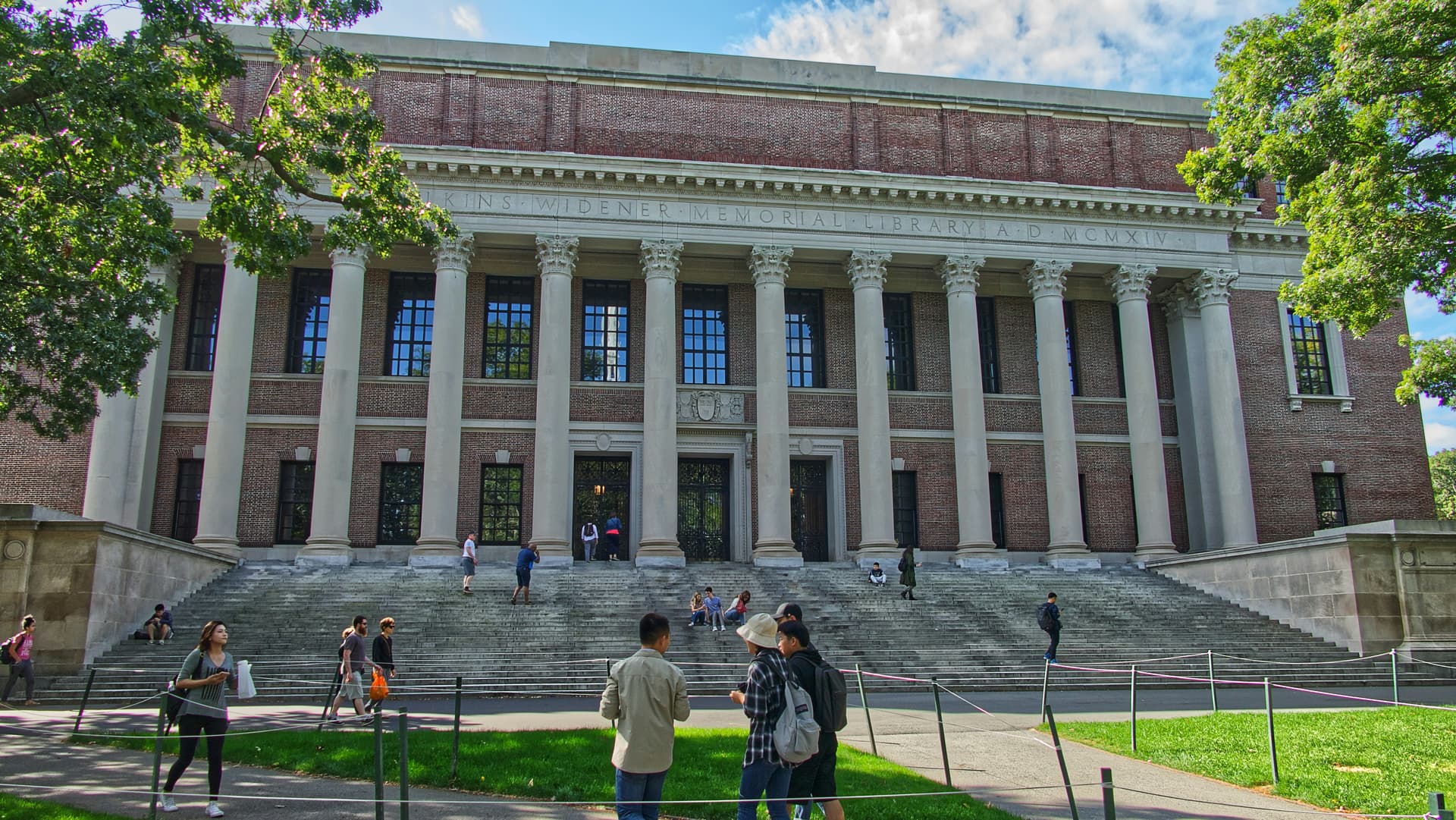
Harvard's acceptance rate hovers around 3.4%. Of 50,000+ applicants, roughly 1,700 are admitted.
But statistics don't tell you what you need to know: Who actually gets in?
This guide analyzes real patterns in successful Harvard applicants—not just the numbers, but the profiles, activities, and achievements that lead to admission.
The Numbers (Quick Overview)
Harvard Class of 2029 Statistics:
- Applications: ~50,000+
- Admitted: ~1,700
- Acceptance rate: ~3.4%
- Yield (enrolled): ~84%
Academic Profile of Admits:
- Average unweighted GPA: 3.94
- SAT range (middle 50%): 1500-1570
- ACT range (middle 50%): 34-36
- Students in top 10% of class: 94%
What these numbers tell you: Academic excellence is expected. Nearly everyone admitted has near-perfect academics.
What these numbers don't tell you: What separates the 1,700 admits from the 48,000+ rejects who also had near-perfect academics.
The Categories of Admits
Let's be honest about who gets into Harvard:
Category 1: Recruited Athletes (~15-20%)
Harvard recruits for 42 varsity sports. Recruited athletes have significantly higher acceptance rates—sometimes 90%+ for highly recruited prospects.
What this means for you: Unless you're a nationally competitive athlete being recruited, this category doesn't apply.
Category 2: Legacies (~15%)
Children of Harvard alumni have a significant advantage. Legacy applicants are admitted at 4-5x the rate of non-legacies.
What this means for you: If you don't have Harvard legacy, you're competing in a harder pool.
Category 3: Development Cases (~5-10%)
Children of major donors or those who can be expected to donate significantly. This is a reality at all elite universities.
What this means for you: Unless your family can make seven-figure donations, this doesn't apply.
Category 4: First-Generation/Underrepresented (~10-15%)
Harvard actively seeks geographic, socioeconomic, and background diversity. First-generation college students and those from underrepresented backgrounds have an advantage.
What this means for you: If you're from a unique background, lean into it authentically.
Category 5: Academic/Achievement Stars (~50-60%)
These are the students admitted purely on merit—no hooks, just exceptional achievement. This is the category most applicants are competing in.
This is where differentiation matters most.
What "Academic/Achievement Stars" Actually Look Like
Let's examine the profiles that succeed in the open competition:
Profile Type A: The Published Researcher
Characteristics:
- Published research in peer-reviewed journals
- Research in a focused area showing intellectual depth
- Often has presented at conferences or competed in science fairs
- Clear narrative connecting research to future goals
Example Profile:
Junior who published first-author paper in IEEE on machine learning for medical diagnostics. Research led to ISEF semifinal placement. Intends to study biomedical engineering and continue research in healthcare AI.
Why it works: Demonstrates the ability to contribute to knowledge at a level beyond typical high schoolers.
Profile Type B: The Competition Winner
Characteristics:
- National or international recognition in competitions
- Olympiad medalist, ISEF finalist, Regeneron Scholar, etc.
- Sustained excellence in a specific domain
- External validation from expert judges
Example Profile:
USAMO qualifier and two-time AIME high scorer. Math team captain who started tutoring program for underserved middle schoolers. Plans to study mathematics and explore research in number theory.
Why it works: Objective, external validation of exceptional ability that admissions officers can trust.
Profile Type C: The Founder/Builder
Characteristics:
- Founded organization with measurable impact (not just a "club")
- Real metrics: users, people served, revenue, policy changed
- Demonstrated leadership and execution ability
- Impact beyond their immediate circle
Example Profile:
Founded nonprofit providing STEM education to rural schools. Reached 2,000+ students across 15 schools. Developed curriculum now used by three school districts. Plans to study education policy.
Why it works: Shows ability to create real change, not just participate in existing systems.
Profile Type D: The Intellectual Standout
Characteristics:
- Depth of engagement in an academic area beyond coursework
- Independent projects showing genuine intellectual curiosity
- Often unusual or niche interests pursued seriously
- Teachers/mentors describe as "the most intellectual student I've taught"
Example Profile:
Self-taught classical Greek to read Homer in original. Translated passages that became part of published scholarly commentary. Runs podcast interviewing classicists about ancient literature. Plans to study classics.
Why it works: Demonstrates the intellectual curiosity and self-direction that Harvard values.
What Doesn't Work
The "Well-Rounded" Generic Applicant
Profile:
- 4.0 GPA, 1550 SAT
- NHS President
- Varsity Tennis (3 years)
- Hospital volunteering (200 hours)
- Model UN (2 years)
- Piano (Grade 8)
- Summer "leadership" program
Why it fails: This describes 30,000+ Harvard applicants. There's nothing memorable. Nothing that makes an admissions officer pause. Nothing that demonstrates what Harvard values: intellectual vitality, impact, and potential for contribution.
The Resume Padder
Profile:
- 15+ activities
- "Founder" of 3 clubs
- Multiple "leadership" positions
- Lots of participation, little depth
Why it fails: Admissions officers call this "checklist syndrome." They see through it. Breadth without depth signals strategic activity collection rather than genuine engagement.
The "Perfect Stats" Applicant
Profile:
- Perfect GPA
- 1600 SAT, 36 ACT
- Excellent activities
- Great essays
- No distinctive achievement
Why it fails: Perfect stats are common among Harvard applicants. Without a distinctive achievement—published research, major competition wins, measurable impact—there's nothing that separates this student from thousands of similar applicants.
The Admissions Formula (As Close As We Can Get)
Based on public statements from Harvard admissions officers and patterns in successful applicants:
Weight 1: Academic Excellence (Required, Not Differentiating)
- Near-perfect GPA expected
- High test scores expected (if submitted)
- Rigorous course load expected
- This gets you in the door, nothing more
Weight 2: Distinctive Achievement (Major Differentiator)
- One or more achievements that fewer than 1% of applicants have
- External validation (publication, competition win, measurable impact)
- Depth in a specific area
- This is what separates admits from rejects
Weight 3: Intellectual Vitality (Major Factor)
- Genuine curiosity beyond coursework
- Self-directed learning
- Questions that go beyond "what" to "why" and "what if"
- Essays and recommendations reveal this
Weight 4: Personal Qualities (Important)
- Character and integrity
- Leadership and contribution to community
- Resilience and growth mindset
- Shown through activities, essays, and recommendations
Weight 5: Fit and Contribution (Important)
- What will you contribute to Harvard?
- How will you engage with the community?
- Why Harvard specifically?
- Supplemental essays address this
What Successful Applicants Have in Common
Across all successful profiles, these patterns emerge:
1. One Thing That Sets Them Apart
Every successful applicant has something that makes them memorable. Not five things. Not ten things. One thing.
- Published research
- Major competition win
- Founded impactful organization
- Unusual intellectual pursuit
- Exceptional creative achievement
This becomes their "calling card"—what admissions officers remember about them.
2. External Validation
The strongest achievements have external validation:
- Peer-reviewed publication
- Competition win judged by experts
- Impact measured by outside metrics
- Recognition from authorities in the field
Self-reported achievements are less compelling than those validated by external experts.
3. Authentic Passion
Successful applicants aren't doing things for college. They're pursuing genuine interests that happen to be impressive.
Admissions officers can tell the difference. Authenticity comes through in essays, interviews, and recommendation letters.
4. Clear Trajectory
Successful applicants tell a coherent story:
- Here's what I care about
- Here's what I've done
- Here's where I'm going
The activities, essays, and recommendations all point in the same direction.
5. Impact Beyond Self
The most compelling achievements benefit others:
- Research that contributes to knowledge
- Organizations that help communities
- Work that solves real problems
Harvard is looking for students who will make a positive difference in the world.
How to Build a Harvard-Ready Profile
Start Early (Freshman/Sophomore Year)
- Find your genuine interest — What do you actually care about?
- Go deep — Commit to one area rather than spreading thin
- Seek mentorship — Connect with experts who can guide real work
- Begin building — Start projects that will develop over years
Develop and Execute (Junior Year)
- Produce tangible outcomes — Publish research, win competitions, create measurable impact
- Get external validation — Peer review, competition judges, outside recognition
- Demonstrate leadership — Lead in your area of expertise, not just hold titles
- Build your narrative — Connect activities into a coherent story
Present and Apply (Senior Year)
- Let achievements speak — Your distinctive achievements are your strongest asset
- Tell your story authentically — Essays should reveal who you are, not who you think they want
- Choose recommenders wisely — People who know you well and can speak to your intellectual vitality
- Apply strategically — Early action if Harvard is your clear first choice
The Research Advantage
Among applicants without hooks (legacy, athlete, development), published researchers have among the highest success rates.
Why?
- Published research is rare among high schoolers
- It demonstrates intellectual ability at the highest level
- It's externally validated through peer review
- It shows potential to contribute to Harvard's research community
How to Build a Research Profile:
The YRI Top 1% Profile Builder is designed specifically for this path. Students receive PhD mentorship, publish in peer-reviewed journals, and compete at the highest levels.
Learn more about building a Harvard-ready profile →
Final Thoughts
Harvard admits students who have:
- Academic excellence (necessary but not sufficient)
- Distinctive achievements (the key differentiator)
- Intellectual vitality (genuine curiosity and depth)
- Impact potential (ability to contribute to the world)
The students who get rejected often have the first but lack the rest.
If you're serious about Harvard or similar universities, focus less on accumulating activities and more on achieving something extraordinary in one area.
One published paper. One major competition win. One organization with measurable impact.
That's what Harvard admits look like.
Frequently Asked Questions
What if I don't have any distinctive achievement yet?
Start building now. If you're a freshman or sophomore, you have time. If you're a junior, focus intensively on one high-impact achievement. Research programs like YRI can help students achieve publication-level work in 6-12 months.
Are legacies and athletes the only ones who get in?
No. Roughly 50-60% of admits are "academic/achievement stars" with no hooks. But they have distinctive achievements—research, competitions, impact—that separate them from the mass of qualified applicants.
How important are essays?
Essays reveal your intellectual vitality and personal qualities. They're important, but they can't compensate for a lack of distinctive achievements. The best essay strategy: have something remarkable to write about.
Should I apply Early Action?
Harvard's EA acceptance rate is higher than RD, but this partly reflects that stronger applicants apply early. If Harvard is genuinely your first choice and your profile is strong, EA is typically the right choice.
What if I'm not admitted?
Harvard rejects many extraordinary students simply because there aren't enough spots. Rejection doesn't mean you're not exceptional—it means the process is extremely competitive. The same achievements that make you competitive for Harvard will serve you well at other excellent universities and in life beyond college.